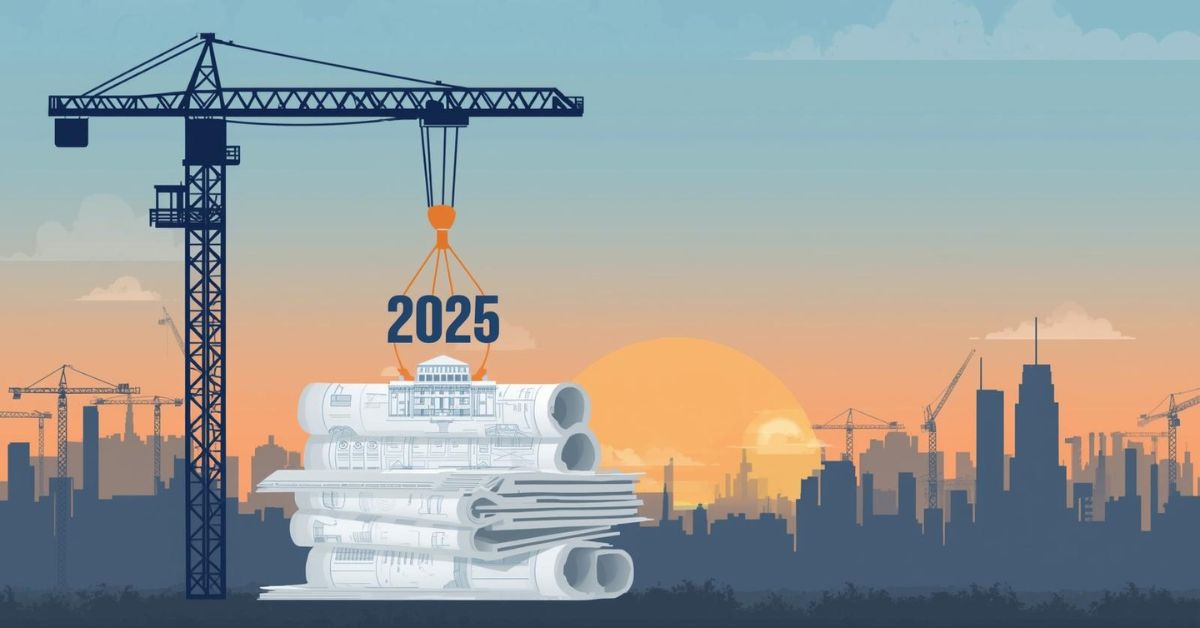
The demand for PDF to CAD conversion services from construction companies has significantly increased in 2025 compared to 2024, reflecting a broader shift toward digital efficiency, faster project execution, and reduced on-site errors.
Across residential, commercial, and infrastructure projects, construction firms are moving away from static PDF drawings and adopting editable CAD formats (DWG/DXF) to streamline planning, coordination, and execution.
Why PDF to CAD Demand Rose Sharply in 2025
1. Increase in Renovation & Retrofit Projects
In 2025, renovation and retrofit projects surged as companies focused on upgrading existing buildings rather than new construction. Most legacy drawings are available only as PDFs or scanned files. Converting these into CAD allows contractors to:
-
Accurately plan modifications
-
Detect clashes early
-
Avoid costly rework
This shift directly increased the need for professional PDF to CAD conversion.
2. Faster Project Timelines and Cost Pressure
Construction companies are under pressure to deliver projects faster and within tighter budgets. Editable CAD drawings enable:
-
Quick revisions
-
Precise quantity take-offs
-
Better coordination with architects and engineers
Outsourcing PDF to CAD saves weeks of manual redrafting, making it a preferred solution in 2025.
3. Improved Coordination with Architects & Engineers
Modern construction projects demand close coordination between architectural, structural, and MEP teams. CAD drawings offer:
-
Layer control
-
Accurate scaling
-
Discipline-wise separation
This level of detail is not achievable with static PDFs, pushing construction firms to convert PDFs into CAD at early project stages.
4. Rise in Digital Construction Workflows
2025 saw increased adoption of digital construction workflows, including BIM readiness and automation. PDF to CAD conversion acts as a first step toward BIM, helping construction companies:
-
Prepare clean base drawings
-
Align with BIM consultants
-
Improve long-term asset documentation
5. Limited In-House Drafting Capacity
Many construction companies prefer outsourcing PDF to CAD instead of expanding in-house CAD teams. Outsourcing offers:
-
Cost efficiency
-
On-demand scalability
-
Faster turnaround times
This operational flexibility made outsourced PDF to CAD services more attractive in 2025.
How PDF to CAD Conversion Benefits Construction Companies
-
Reduces drawing errors and misinterpretations
-
Enhances construction accuracy on site
-
Speeds up approvals and revisions
-
Improves collaboration across stakeholders
-
Supports compliance and documentation standards
2025 vs 2024: A Clear Growth Trend
Compared to 2024, construction firms in 2025 are:
-
Converting PDFs earlier in the project lifecycle
-
Outsourcing more complex multi-disciplinary drawings
-
Integrating CAD outputs with BIM and digital tools
This trend indicates that PDF to CAD conversion is no longer optional – it is a necessity for modern construction operations.
Conclusion
The sharp rise in demand for PDF to CAD conversion services from construction companies in 2025 highlights the industry’s shift toward precision, speed, and digital transformation. As construction projects grow more complex and time-sensitive, editable CAD drawings have become essential for efficient planning and execution.
With this momentum, PDF to CAD conversion is expected to remain a high-demand service throughout 2025 and beyond, especially for construction firms focused on quality, cost control, and timely delivery.